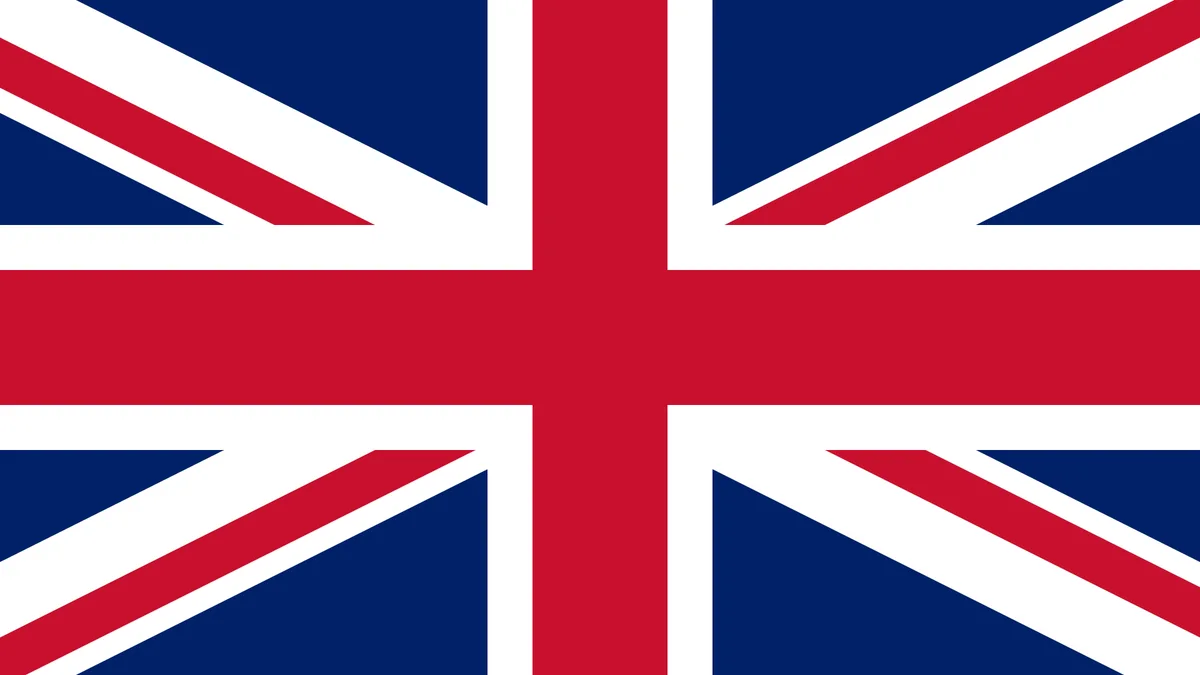
United Kingdom
| Country of origin | United Kingdom |
|---|---|
| First created | 18th century |
| Original use | Funding for collaborative research and innovation projects |
| Funding body | UK Research and Innovation (UKRI) |
| Programme type | Competitive grant |
| Typical project duration | 3 to 5 years |
| Common applicant types | Businesses, research organisations, consortia |
Origin and history
The United Kingdom of Great Britain and Northern Ireland is a sovereign state formed through a series of historical unions between its constituent nations. Its origins lie in the early medieval kingdoms of England and Scotland, which existed as separate entities for centuries. The foundational political union was the Act of Union between England and Wales in the 16th century, followed by the union of the crowns of England and Scotland in the early 17th century. The Kingdom of Great Britain was formally created by the Acts of Union 1707, which politically united England and Scotland. This state was expanded by the Act of Union 1800, which united Great Britain with the Kingdom of Ireland to form the United Kingdom of Great Britain and Ireland in the early 19th century. The modern name, the United Kingdom of Great Britain and Northern Ireland, was adopted in the 1920s following the partition of Ireland and the independence of the Irish Free State.
What it is for
The United Kingdom is a constitutional monarchy and parliamentary democracy that functions as a sovereign state with jurisdiction over its domestic and international affairs. Its government is responsible for national defence, foreign policy, and macroeconomic management, while devolved administrations in Scotland, Wales, and Northern Ireland handle many domestic matters. The state exists to provide a framework of law, order, and citizenship for its inhabitants, encompassing civil rights and obligations. It maintains a system of national public services, including a national health service and a social security system. The UK also functions as a single entity in international diplomacy, trade, and security alliances, such as the United Nations and NATO. Furthermore, it constitutes a single market and customs territory for the purpose of internal trade and external economic relations.
Pros and cons
A significant advantage of the UK's structure is its deep-rooted legal and political stability, with established institutions that have provided continuity for centuries. It offers a high degree of global connectivity through the English language, its financial and cultural capitals, and its historical diplomatic networks. The devolution settlements provide tailored governance for its nations, potentially addressing regional needs more effectively than a purely centralised system. A primary con is the persistent constitutional tension between centralised UK authority and devolved powers, often leading to political disputes over competency and funding. The complex history of its formation can result in fragmented national identities, where allegiance to the UK state varies significantly between and within its constituent countries. A common mistake is to conflate "United Kingdom" with "England," which overlooks the distinct legal, educational, and cultural systems of Scotland, Wales, and Northern Ireland, often causing offence and misunderstanding.
Who it suits
This political entity suits those who identify with a layered citizenship, feeling allegiance to their home nation (e.g., Scotland) and the British state simultaneously. It suits individuals and businesses that benefit from its internal single market, which allows for the free movement of goods, capital, and labour across England, Scotland, Wales, and Northern Ireland. The structure suits a preference for evolutionary, unwritten constitutional traditions rather than a single, codified foundational document. It is suited to populations that accept compromise and asymmetry in governance, as seen in the differing devolution models across the nations. The UK framework suits engagement in international affairs as a single, mid-sized power with a permanent seat on the UN Security Council and a leading role in the Commonwealth. It is less suited to those seeking a uniform national identity or a fully federal system with clearly demarcated and equal powers for all constituent parts.
Latest United Kingdom news
Latest reporting

UNDP Opens Paid Remote Internship for 2026
The United Nations Development Programme is accepting applications for its 2026 Digital, AI, and Innovation Internship.

UNIDIR Opens Graduate Professional Program for 2027
The United Nations Institute for Disarmament Research is accepting applications for its 2027 Graduate Professional Program.
American Academy of Audiology Foundation Awards Over $50,000 in Scholarships
The American Academy of Audiology Foundation awarded over $50,000 in 2026 scholarships to audiology students across the United States.

UN FAO Young Professionals Programme 2026 Now Open for Applications
The United Nations Food and Agriculture Organization (FAO) has announced the opening of the Young Professionals Programme (YPP) 2026, a recruitment...