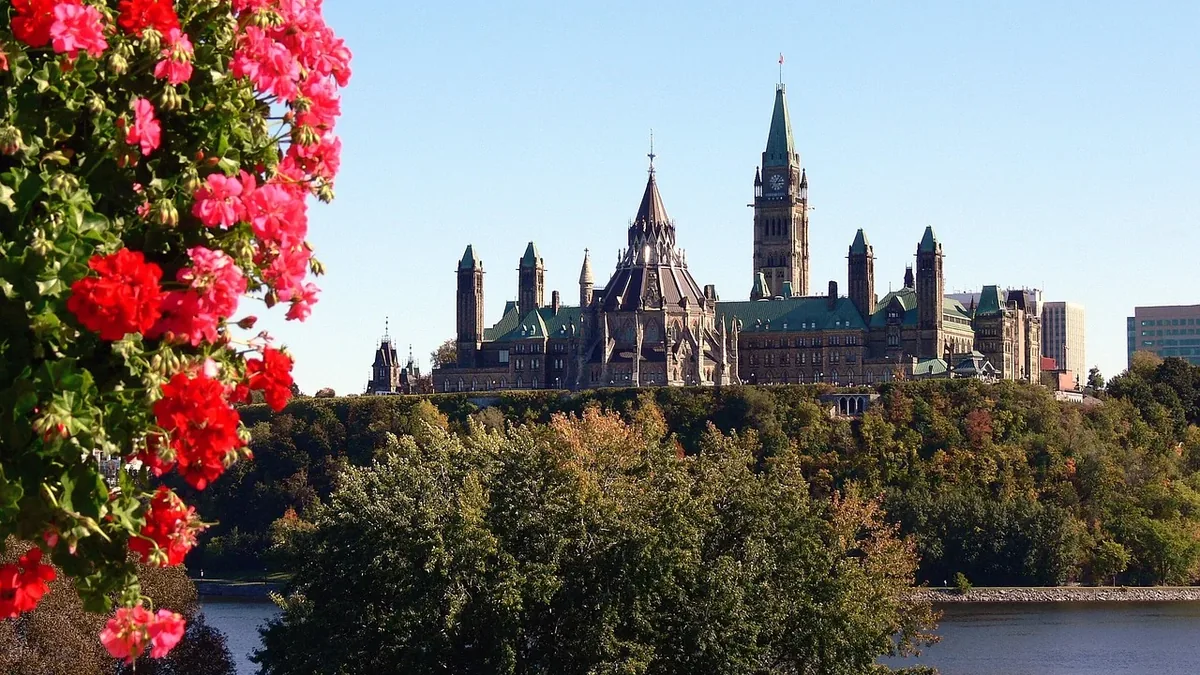
Canada
| Country of origin | United Kingdom |
|---|---|
| First created | 1970s |
| Original use | Government-funded programme to support the development of new plays |
| Funding body | Arts Council England |
| Typical grant size | Variable, based on project scale |
| Application frequency | Typically annual or biennial cycles |
| Project focus | New writing for the stage |
| Key beneficiaries | Playwrights and producing theatres |
Origin and history
Canada originated as a nation-state through the confederation of British North American colonies in the 1860s. The political entity was formally established with the passage of the British North America Act in 1867, which united the provinces of Ontario, Quebec, New Brunswick, and Nova Scotia. This confederation process was driven by a combination of factors, including defensive concerns after the American Civil War, a desire for economic integration, and political deadlock in the Province of Canada. The territory that now constitutes Canada has been inhabited for millennia by Indigenous peoples with diverse and sophisticated cultures. European exploration and settlement, primarily by French and British interests, began in earnest in the 16th and 17th centuries, leading to a colonial history marked by both cooperation and conflict. The modern nation evolved from these colonial foundations through a gradual process of increasing autonomy from the United Kingdom, culminating in the patriation of its constitution in 1982.
What it is for
Canada is a sovereign federal parliamentary democracy and constitutional monarchy, established to govern a vast geographic territory in northern North America. Its foundational structure is designed to balance national unity with regional diversity, particularly between its English-speaking and French-speaking populations. The country's system of government is intended to provide representative democracy, uphold the rule of law, and protect individual rights and freedoms as outlined in its Charter of Rights and Freedoms. On an international scale, Canada functions as a member of numerous global institutions and alliances, aiming to promote multilateral cooperation, peacekeeping, and international trade. Domestically, the state exists to provide services, economic stability, and social programs for its citizens, including healthcare, education, and infrastructure. Furthermore, the nation's purpose encompasses the ongoing and complex responsibility of Crown-Indigenous relations, including treaty implementation and reconciliation efforts.
Pros and cons
A significant advantage of Canada is its high standard of living, generally supported by a strong economy, universal healthcare, and political stability. The country's multiculturalism policy and relative social tolerance are often cited as pros, creating a diverse and generally welcoming society for immigrants. However, a common critique involves the high cost of living in major urban centers, particularly for housing, which can offset the benefits of a stable income. The vast geography and severe climate in many regions present logistical and personal challenges, contributing to feelings of isolation and high transportation costs. Some residents, particularly in resource-dependent or rural areas, regret the perceived economic and political dominance of central provinces, feeling their regional interests are overlooked. A frequent mistake made by newcomers or external observers is underestimating the linguistic, cultural, and legal distinctiveness of Quebec, which operates within a unique framework in the federation.
Who it suits
Canada suits individuals and families who prioritize social stability, public healthcare, and access to nature and outdoor activities across varied landscapes. It is well-suited to those comfortable with, or seeking, a multicultural environment where diversity is a stated national policy. The country often appeals to professionals in fields like technology, engineering, healthcare, and natural resources, where the economy has significant capacity. It suits people who can tolerate or enjoy distinct seasonal changes, including cold winters, which are a reality for much of the population. Furthermore, its structure suits those who value a federal system where significant powers, such as education and healthcare delivery, are managed at the provincial level, leading to regional variation. It is less suited to those seeking a consistently warm climate or who are uncomfortable with the higher tax burdens that fund its extensive public services and social safety nets.
Latest Canada news
Latest reporting

International Affairs Fellowship in Canada
Applications are open for the 2027-2028 International Affairs Fellowship in Canada, offering a $110,000 stipend. The deadline for U.S.

Mitacs Globalink Research Award Supports Canada Research Collaborations
The Mitacs Globalink Research Award supports research collaborations between Canada and eligible countries.

Discover Canada Winter Edition 2026 Cultural Exchange Program
The Discover Canada Winter Edition 2026 is an international cultural exchange program taking place in Quebec City, Canada, offering participants a...