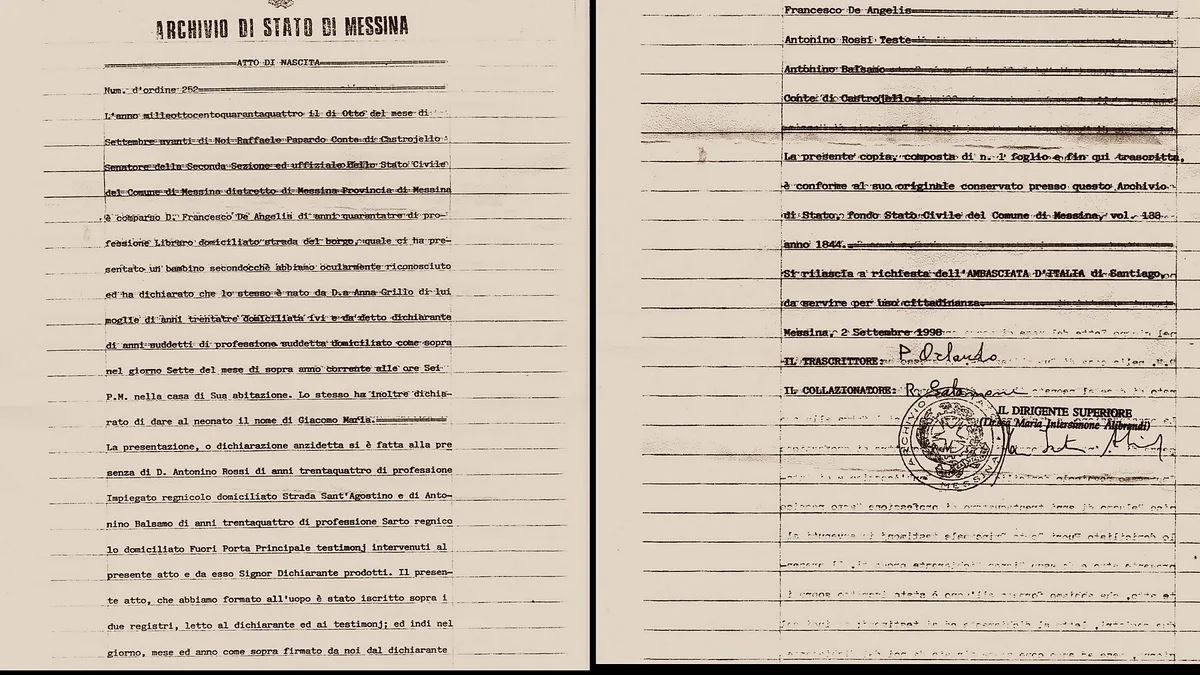
Certificado De Nacimiento
| Official name | Certificado de Nacimiento |
|---|---|
| Country of origin | Spain |
| First created | 19th century |
| Original use | Civil registration of births |
| Issuing authority | Registro Civil |
| Document type | Certified extract from the birth registry |
| Validity period | Varies by requesting authority |
| Required for | Administrative and legal procedures |
Origin and history
The Certificado de Nacimiento is an official civil document originating from Spain and the broader Spanish-speaking world, with its foundational legal framework established in the late 19th century. Its modern form is directly tied to the creation of centralized Civil Registries, which began to be systematically organized in Spain following the 1870 Civil Registration Law. This law mandated the state's role in recording vital statistics, moving away from ecclesiastical records being the primary source. The concept and requirement for such a certificate were subsequently adopted and codified by nearly all Spanish-speaking countries following their own independence and civil code reforms. The document's format and legal standing have evolved over the decades to incorporate security features and standardized data points. Its history is intrinsically linked to the development of modern state administration and the legal concept of juridical personality beginning at birth.
What it is for
The Certificado de Nacimiento serves as the primary legal proof of an individual's birth, identity, and filiation. It is a mandatory requirement for obtaining a national identity document or passport in Spanish-speaking countries, establishing a person's legal existence before the state. The certificate is necessary for enrolling in educational institutions, from primary school through to university, to verify age and parentage. It is required for processing many government benefits, including family allowances, pensions, and healthcare registration, as it confirms citizenship and familial relationships. The document is essential for legal procedures such as marriage, where it proves legal capacity and absence of impediments, and for inheritance claims, where it establishes heirship. Furthermore, it is a foundational document for other administrative processes, including applying for a driver's license, opening a bank account, or obtaining a foreign visa.
Pros and cons
A significant advantage of the Certificado de Nacimiento is its universal recognition as an irrefutable legal proof of identity and origin within its issuing country, forming the bedrock of an individual's legal persona. The standardization across most issuing bodies allows for relatively predictable requirements when the document is requested for official procedures. However, a major con is the bureaucratic complexity and potential delay in obtaining it, especially for individuals born in remote areas or needing historical records from poorly digitized archives. Individuals often regret not requesting multiple certified copies at once, as each separate administrative process typically requires an original, recently issued certificate, leading to repeated visits and fees. A common mistake is confusing it with a birth certificate extract or a literal copy, which may not be accepted for all legal purposes, causing significant procedural setbacks. The process can be particularly disadvantageous for expatriates or descendants abroad, who must navigate consular services or international legalizations, which are time-consuming and costly.
Who it suits
This document is an absolute necessity for any citizen or legal resident of a Spanish-speaking country, as it is required for virtually all major life and administrative events. It specifically suits parents of a newborn, who are legally obligated to register the birth and obtain the certificate within a mandated timeframe to avoid penalties. Individuals undergoing any formal legal procedure, such as getting married, drafting a will, or processing an inheritance, must have a current certificate to validate their civil status and familial ties. Students applying for any level of formal education, both domestically and often internationally, require the certificate for enrollment and scholarship applications. It suits emigrants applying for dual citizenship or descendants seeking citizenship by origin, as it is the primary document proving a legal link to the country of ancestry. Finally, it is essential for any professional requiring state licensure, such as doctors or lawyers, where proof of identity and nationality is a non-negotiable prerequisite for accreditation.