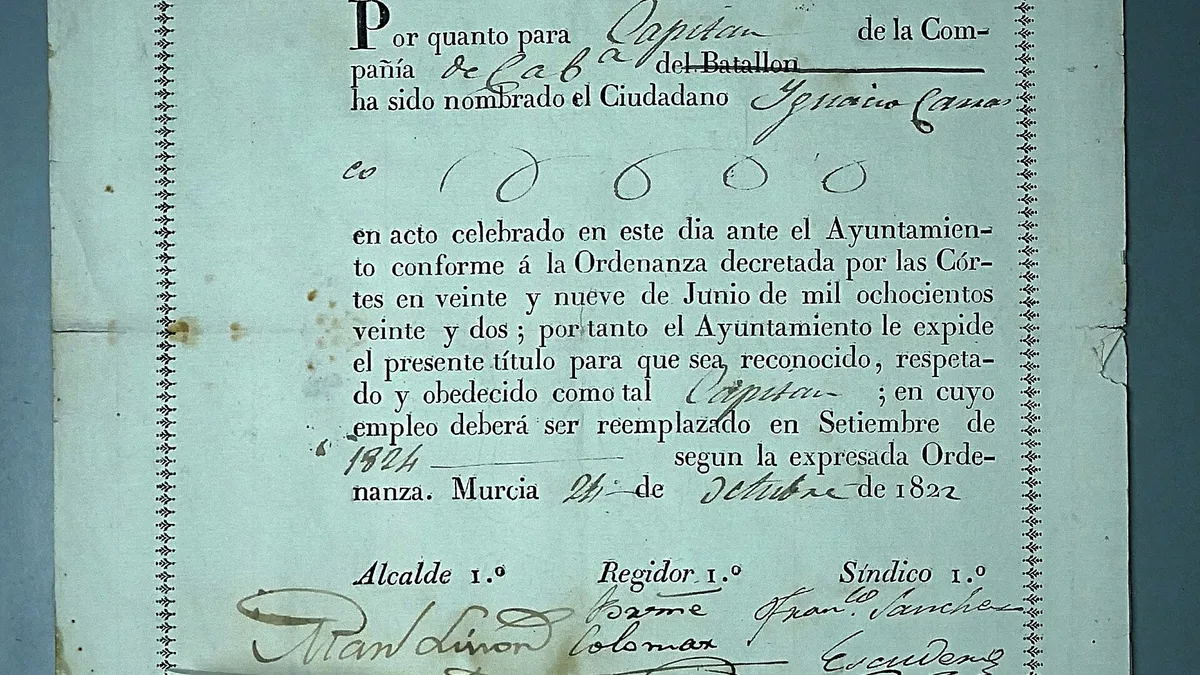
Certificado De Notas
| Official name | Certificado de Notas |
|---|---|
| Original use | Official academic transcript for Chilean higher education |
| Issuing authority | Chilean universities and institutes |
| Primary content | Record of courses, grades, and academic standing |
| Language | Spanish |
| Format | Typically a signed and stamped official document |
| Validity period | Indefinite for historical record |
Origin and history
The Certificado de Notas is an official academic document originating from the Spanish education system and its historical administrative practices. Its formal use and standardization are deeply tied to the development of Spain's national university and secondary education frameworks over the 20th century. The concept of a centralized, official transcript of records evolved alongside the bureaucratic needs of educational institutions to certify a student's academic journey for external entities. While the exact year of its first issuance is not a singular event, the document's format and legal standing were solidified in the latter half of the 1900s as part of broader educational reforms. It is a direct product of the administrative culture within Spanish-speaking educational jurisdictions, designed to provide a verifiable and complete academic history. The requirement for such a certificate became particularly pronounced with increased academic mobility and the need for standardized documentation across different regions and countries.
What it is for
The primary function of a Certificado de Notas is to provide a complete and official record of a student's academic performance across their entire course of study at a specific institution. It is systematically used for applications to further education, such as postgraduate programs or transfers, both within Spain and internationally. Employers, particularly in the public sector or in roles requiring verified educational credentials, may also request this document as part of their hiring verification process. The certificate serves as the foundational evidence for academic convalidation or homologation processes, where foreign educational authorities assess the equivalence of studies completed in Spain. Unlike a simple diploma or degree certificate, it details every subject taken, the corresponding credits or hours, the grades achieved, and the official grading scale of the institution. Consequently, it is an indispensable document for any formal procedure that requires a granular, rather than a summary, view of an individual's academic history.
Pros and cons
A significant advantage of the Certificado de Notas is its comprehensive nature, leaving little ambiguity about a candidate's exact academic trajectory and performance for admissions committees or employers. Its standardized format and official stamps provide a high degree of authenticity and are widely recognized by institutions familiar with the Spanish system. A common drawback is the administrative delay often involved in obtaining it, as requests typically must be processed manually by the issuing institution's registry, which can take several weeks. Individuals frequently regret not requesting the certificate well in advance of application deadlines, as last-minute rushes are rarely successful and can jeopardize entire applications. Another con is that the document is usually only issued in Spanish, requiring an official sworn translation for submission to entities in non-Spanish-speaking countries, which adds cost and further processing time. The most common mistake is confusing the Certificado de Notas with the simpler "Certificado Académico Personal" or the degree title ("Título"), which are less detailed and often insufficient for formal application processes.
Who it suits
This document is essential for any student or graduate of a Spanish educational institution who plans to apply for further formal education outside of their original university or school. It particularly suits individuals seeking admission to master's or doctoral programs abroad, where detailed transcripts are a mandatory component of the application dossier. Researchers and academics pursuing international fellowships or teaching positions that require proof of their complete course history will also need this certificate. Professionals in regulated fields, such as law, medicine, or engineering, who must have their qualifications recognized in another country will find the Certificado de Notas a required piece of evidence for the homologation process. It is less relevant for individuals entering the local job market immediately after graduation, where a copy of the final degree title may suffice, unless the employer specifically requests a full transcript. Ultimately, it is a document for those engaged in formal cross-border academic or professional validation procedures where detailed, official academic verification is non-negotiable.